

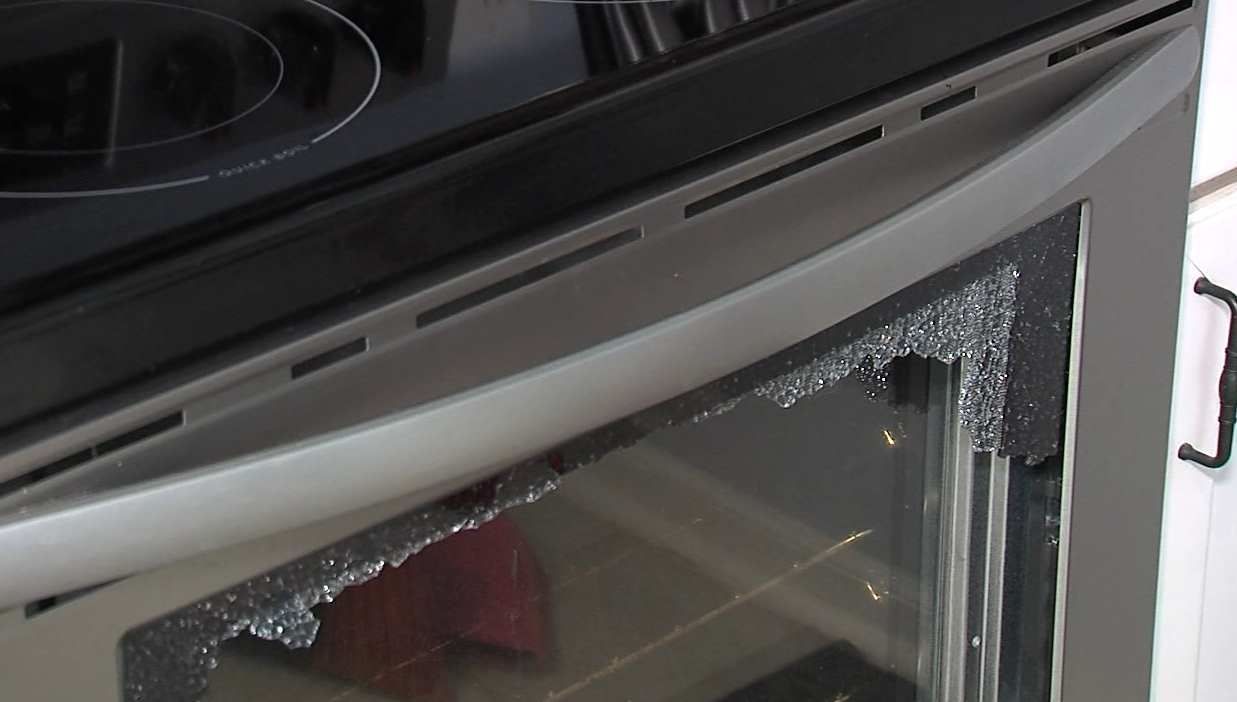
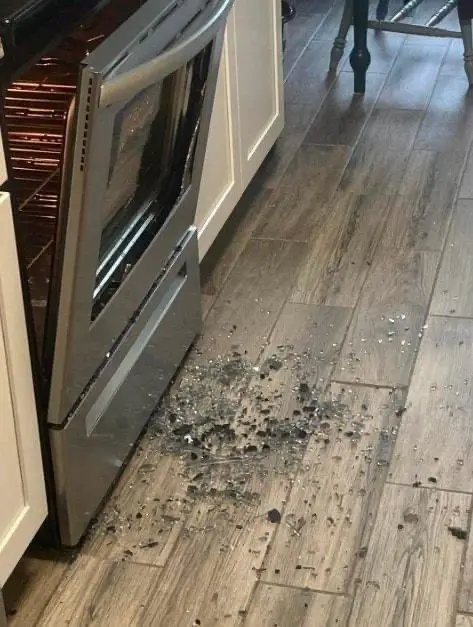
There was a loud crash emanating from the kitchen that startled Willie Mae Truesdale. When she noticed that her oven’s glass door was broken into a million pieces, she hurried to see what had occurred. The oven was off at the moment. She then on, “It was like what in the world. It was shocking and you had to really see it to believe it.” Glass broke and was scattered across the floor.
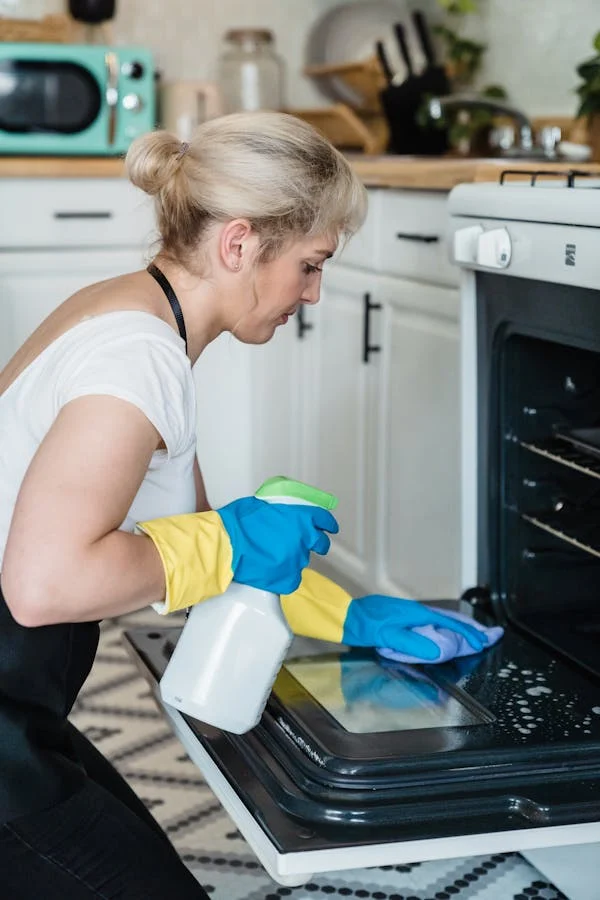
Truesdale’s situation is not unusual, though. The similar problem was also experienced by other ladies. Among them was Cheryl, a suburban mother who was baking muffins when she realized that the oven she had bought three months earlier was around 25 degrees wrong. She called a repairman to mend her oven after the COVID-19 quarantine ended. This occurred at that time. She had chosen to start with a self-cleaning cycle, which resulted in a loud explosion with the inner glass of the oven door breaking.
Michelle Wheat’s oven door exploded in a same manner. Similar to Truesdale’s oven, Wheat’s oven was off when the explosion occurred.
Glass broke everywhere in the kitchen, but fortunately, none of her four kids were hurt. Since 2019, the Consumer Product Safety Commission has received about 450 reports of these kinds of occurrences. The ovens in question were from various manufacturers.
Pexels
Following the occurrences, the three ladies had issues with the makers. Even though Truesdale’s oven was still covered by warranty, a Frigidaire technician accused her of being responsible for the explosion and made her pay for a replacement door. After NBC intervened, Bosch decided to replace Cheryl’s oven. Wheat had to pay a technician $100 to verify that the glass of their out-of-warranty oven was cracked, and the repair would have cost an additional $314.
In case it occurred again, Frigidaire advised her to purchase an extended warranty. Wheat expressed frustration, saying, “This shouldn’t have happened.” I was attempting to convey it to them.
Chicago Window Expert’s Mark Meshulam explains why these explosions could be occurring. “Oven glass can break spontaneously for two reasons,” he explained. One type of oven glass is soda lime glass, often known as window glass, and it is rapidly heated and cooled to create a tempered surface. Oven doors are made of that particular kind of glass. Glass made of borosilicate is another kind. It is most frequently employed in scientific glassware or vintage Pyrex glass, which is extremely heat- and cold-tolerant. Because soda lime glass is less resistant to heat cycles than glass, there has been a rise in these kinds of breakage as a result of the switch.

Pexels
An further theory is that a nickel sulfide inclusion, a minute glass imperfection, is what’s causing the explosions. Its diameter is just a hundredth of a millimeter. The little ball has certain peculiar characteristics. With time, it’s trying to escape, Meshulam continued. And occasionally a high-heat incident, such as an oven cleaning incident, might eventually cause the underlying spontaneous breakdown.
But he assures customers that ovens with self-cleaning features are safe. According to him, “the majority of people will use the self-cleaning feature their entire lives and not really encounter this problem.” He also believes that oven explosions that occur when the oven is off are caused by microscopic chips and flaws. The fact that the door may shatter long after the first damage occurs makes this particularly worrying.
Since these damage sites typically occur during manufacture, shipment, or installation, homeowners are unable to control them.
Microscopic chips or scratches on the glass might also result from vigorous cleaning techniques and overuse of force.