

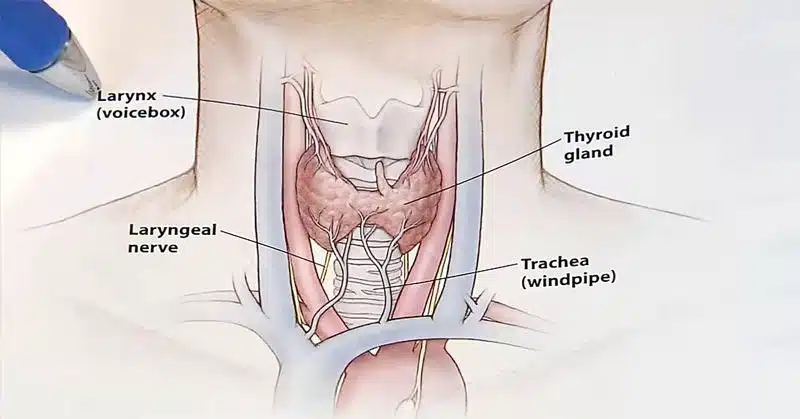
You may be diagnosed with thyroid illness for a variety of reasons. Give these issues some thought, and determine whether there may be a problem.
Do you…
own fragile or thick fingernails?
own dry skin or eyes that are easily irritated?
possess a raspy voice?
possess coarse hair, thinning hair, or hair loss?
have the outside third of your eyebrows thinned out?
Feel chilly on your hands and feet?
perspire a lot?
feel too worn out?
Do you experience anomalies in your menstrual cycle?
lack lust for sex?
Having severe PMS or menopausal symptoms?
have hands and feet swelling on a regular basis?
experiencing issues with your heart rate or blood pressure?
possess elevated cholesterol?
struggle to focus or recall things?
had weight fluctuations that seem out of the ordinary?
possess melancholy, irritability, anxiety, or moodiness?
feel weak, sore, or tired in your muscles?
possess an autoimmune disease diagnosis?
possess a background of radiation therapy?
possess a background of being around poisons?
possess a family background of thyroid issues?
Rating: You are most likely in good health if you choose “yes” for less than two questions.
You pose a slight danger if you choose “yes” for two or four of the questions.
You run a serious danger of experiencing issues if you selected “yes” for four or more of the questions.
You might want to talk to your healthcare professional about the potential of having thyroid illness if you answered “yes” to four or more questions. Testing is easy.
When to obtain your own thyroid findings and what questions to ask
The first thing your doctor will likely do if you suspect a thyroid issue is to order a thyroid-stimulating hormone (TSH) blood test. The likelihood of becoming hypothyroid increases with score. However, this test plays a significant role in the high number of undiagnosed thyroid patients. The American Academy of Clinical Endocrinologists advises TSH values between 0.3 to 3, believing that this range accounts for minor thyroid problems, however most clinicians consider normal TSH levels to be between 0.5 and 5 mIU/L. According to some practitioners of alternative medicine, any score more than two denotes hypothyroidism.
Mark Hyman, MD, suggests that if your TSH results are “normal” but you still think you may have a thyroid issue, you should ask your doctor to run the following tests.
T4 and T3 for free. Each distinct thyroid hormone is measured by this test; if one is imbalanced, it might not be detected by the TSH test. According to Hyman, the typical range for T4 is 0.9–1.8 nanograms per deciliter, whereas the range for T3 is 240–450 picograms per deciliter.
antibodies to thyroid peroxidase or antithyroglobulin. Thyroid illness may be indicated by elevated thyroid antibodies in the blood.
Test for activation of thyroid-releasing hormone (TRH). This test, which is most useful for mild instances, assesses hypothyroidism brought on by a malfunctioning pituitary gland.
Put yourself to the test. Get a basal body thermometer from a pharmacy and take a reading as soon as you wake up. You can be hypothyroid if the temperature drops below 97.6 degrees for three days in a row.
Get access to a 32-page eChapter written by Dr. Mark Stengler from The Holistic Guide to Gut Health to discover how to improve your health inside!